Sign-in Changes | Terms of use screen reader | Observer meta-research | Taxonomy card sort | Experience research
VA.gov Identity | Sign-in migration
Objective: Communicating sign-in changes and iteratively increasing the urgency of nudges to move to a modern sign-in account, which works across government agencies, before deprecated accounts are removed. This allows the VA to move from four sign-in options down to two, reducing veteran confusion and mitigating risk from accounts that didn’t comply with recent NIST standards.
My Role: I led this iterative design and research work as part of my duties as UX led on a federal contract position on the Identity Team for the VA digital experience. I led and conducted a substantial portion of the UX work, but I worked along side a UX researcher, content designer, engineers, and product manager on my team. My team closely consulted with VA stakeholders especially on timelines for all teams involved, several external stakeholders. I followed VA’s Collaboration Cycle to ensure each iteration of our products complied with the VA Design System, 508 accessibility guidelines, and other Platform guidelines that ensure consistency across the site.
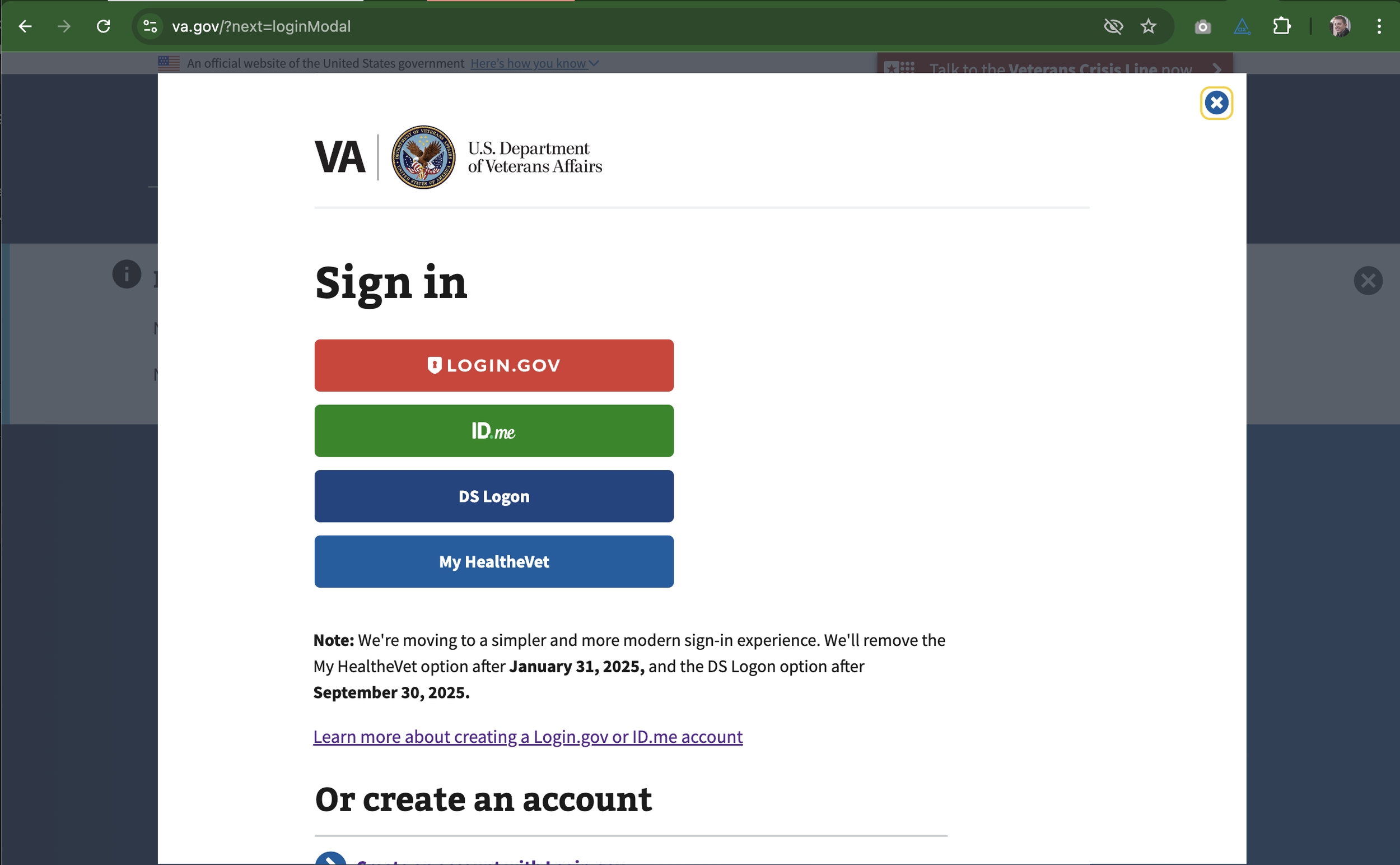
Sign-in page, deprecation note state, live page
Four sign in options
Years of research, conducted by me and by other’s before my time on this team, continued to show many Veteran’s were frustrated or confused by having so many options to sign in to their account. The two older style accounts were potential security risks because they didn’t comply with NIST guidelines like requiring multifactor authentication (MFA). The engineers had to rig that sign-in method so it forced an external MFA, which was problematic for usability. One option also used an outdated and debunked security measure forcing veterans to change their password every 3 months, when many folks only sign in a few times per year. It took time and behind the scenes work with plenty of metrics to convince the right folks of the need. Once we did, we had about 9 months to remove the first option and 14 months to remove the second.
A major effort
This was a herculean, multi-team effort. Content and communications needed to get the word out about the change via multiple channels. A team was needed to lead in-person registration events across the US to help the veterans most in need one-on-one. My team’s effort focused on iterating the sign-in page and adding digital nudges to get folks to change to one of the modern, secure accounts. But we also worked some across teams
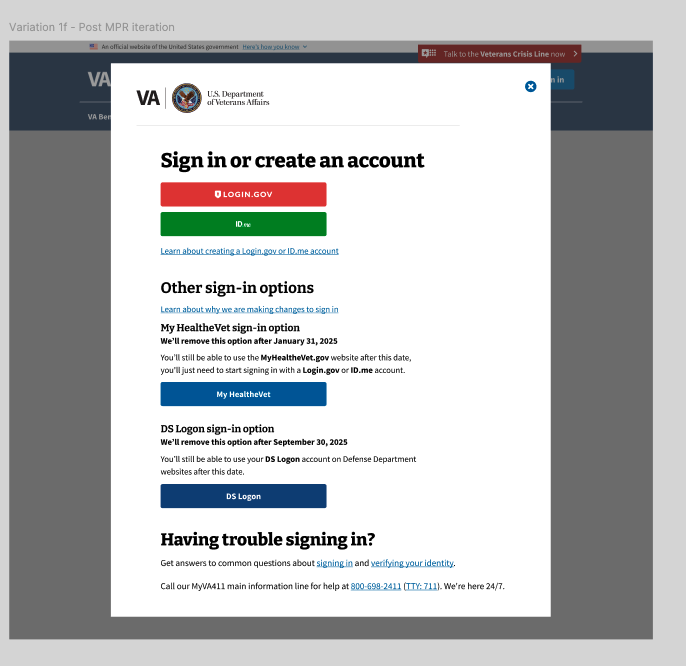
Sign-in page, visual deprecation state, live page
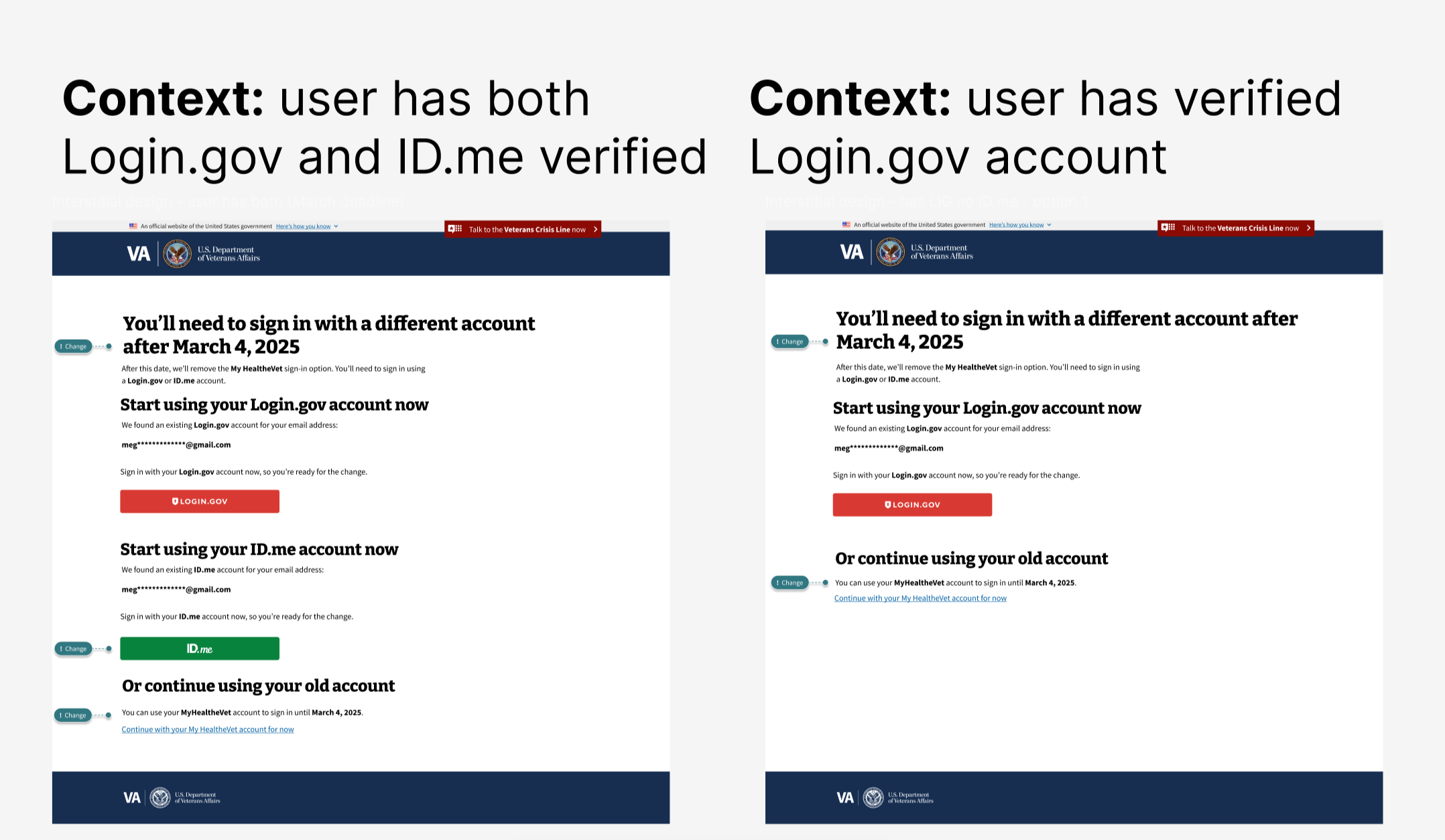
Figma designs showing two of the interstitials
Sign-in page changes
We designed changes to the sign-in page to give visual preference to the modern style accounts, either Login.gov or ID.me. Over 70% of authentications were already being made with one one of these accounts. But there were still xxxx hundred thousand authentications being made with the deprecated accounts. That’s a lot of people to move!
Usability research showed that adding an interstitial would help encourage migration, especially for those who already had a modern account but were still signing in with a deprecated account. We also found that a lot of people would wait until much closer to time. This was especially true for folks who didn’t have a modern account already set up. This information gave us expectations when reviewing conversion metrics.
Goals met
It was a long and iterative process to simply remove two buttons. But we needed to move many folks over, so we needed the time to communicate the changes, help folks who needed the extra one-on-one help, and take into account business requirements as well. Along the way we conduced several rounds of research, worked across stakeholders and utilized Platform team assistance to make a thoughtful set of designs that would nudge folks with increased urgency the closer we got to the migration deadline.
Throughout the process I kept a close eye on metrics, which continued showing that as veterans stopped using the deprecated options, usage of the modern accounts saw an equal increase, giving us confidence that we successfully got most folks over. We also kept a watch on how man accounts added a modern credential among other metrics. After this massive, multi-team effort, we ended up with a less complex sign in page that caused less confusion for veterans and set them up for long-term success. As other major agencies begin to undertake similar sign-in changes, veterans will already have their cross-government account
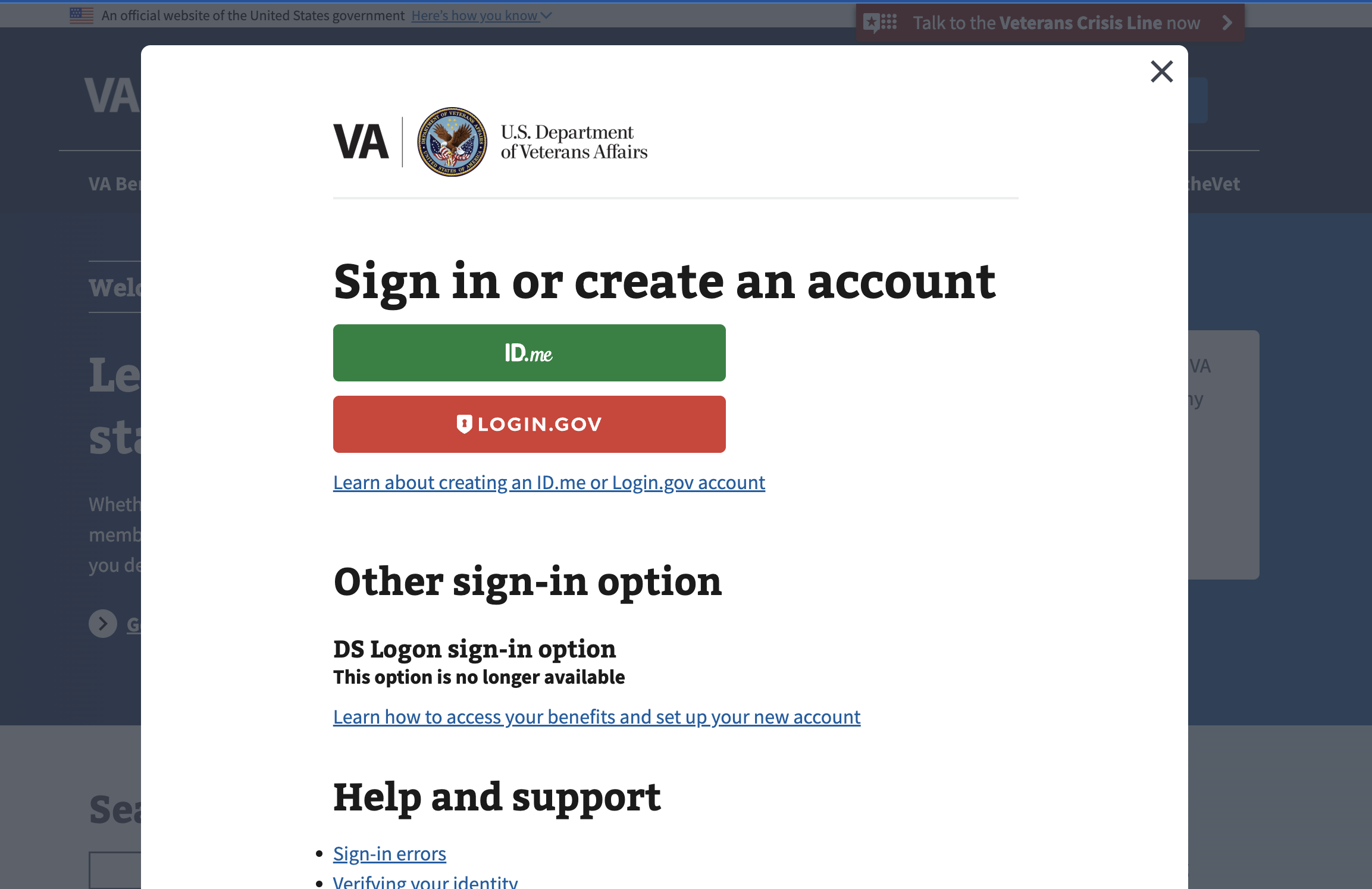
Sign-in page, post DS Logon removal state, live page
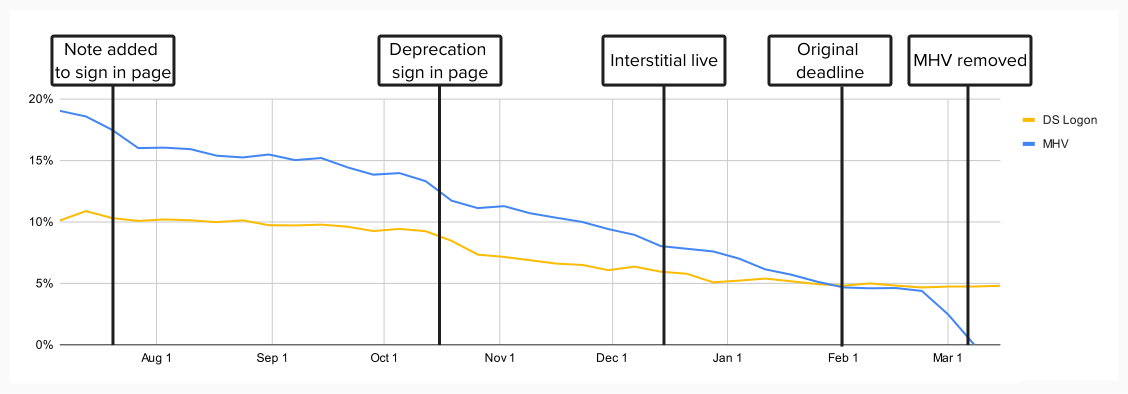
MHV sign-in usage mapped through front-end iterations